
Trusted Global Partner in Healthcare Solutions
Trusted Since 2017 Excellence Serving 100+ Global Clients
Logo

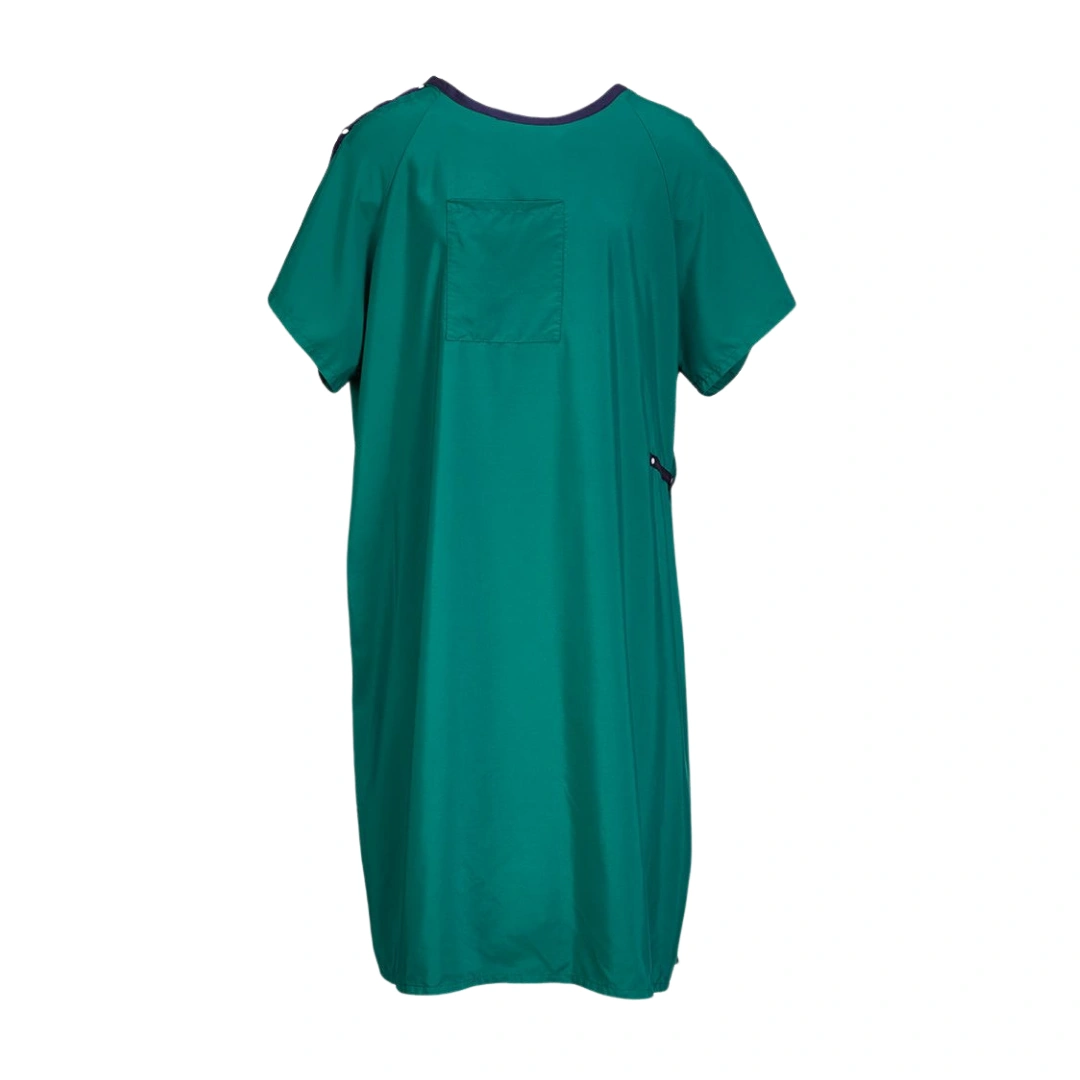
Hospital Gown

Hospital Gown

Hospital gown is a loose-fitting, functional garment designed for patients to wear during their stay in a healthcare facility. It is engineered to provide medical staff with easy access to the patient's body for examinations, monitoring, and the placement of intravenous (IV) lines, while maintaining a basic level of patient modesty.

Manufactured from either disposable non-woven fabric (polypropylene) for short-term use or reusable cotton/polyester blends for long-term comfort, these gowns are designed to withstand high-temperature industrial laundering.

Uses

The hospital gown is a standard requirement for various clinical scenarios.

  • Inpatient Care: Providing a standard, hygienic garment for patients admitted to wards.

  • Surgical Procedures: Allowing easy access for anesthesia and surgical site preparation.

  • Diagnostic Imaging: Used during X-rays, MRIs, and CT scans to ensure no metal (from zippers or buttons) interferes with the imaging.

  • Physical Examinations: Enabling physicians to listen to heart/lung sounds or inspect skin without requiring the patient to fully undress.

Features

Designed for clinical utility and patient accessibility, hospital gowns prioritize function over fashion.

  • Back-Opening Design: Typically features ties or snaps at the neck and waist to allow the gown to be opened quickly by staff.

  • Telemetry Pockets: Many modern gowns include a small pocket for heart-monitoring devices (telemetry packs).

  • Wide Sleeves: Oversized sleeves facilitate the easy passage of IV tubing and blood pressure cuffs.

  • IV Snaps: Some premium gowns feature snap fasteners along the shoulders and sleeves, allowing the gown to be changed without disconnecting IV lines.

Applications

Used across all levels of healthcare and diagnostic services.

  • General Hospital Wards and Intensive Care Units (ICU)

  • Ambulatory Surgery Centers

  • Radiology and Diagnostic Labs

  • Nursing Homes and Rehabilitation Centers

Disclaimer

While designed for function, proper usage is key to patient dignity and safety.

  • Modesty Protection: Patients often wear two gowns (one frontward, one backward) or a "wrap-around" style to ensure full coverage when walking in hallways.

  • Size Selection: Choosing the correct size is essential to prevent tripping hazards; "Bariatric" sizes are available for larger patients.

  • Sterility: Standard patient gowns are non-sterile. For surgical staff, a separate "Surgical Gown" must be used.