

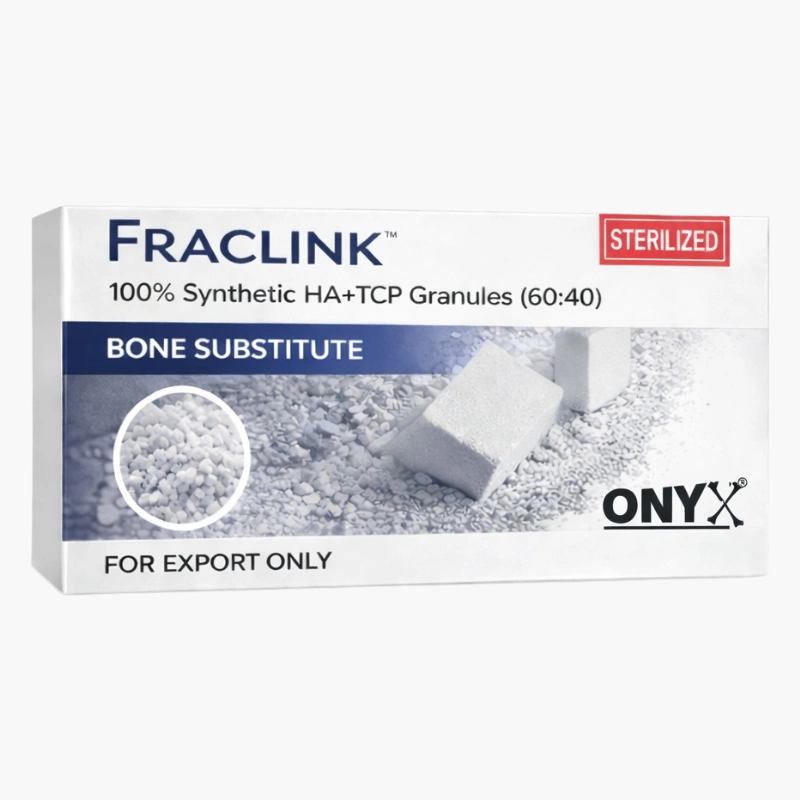
Fraclink
Large bone defects are serious complications that are most commonly caused by extensive trauma, tumors, infection, or congenital musculoskeletal disorders. Bone defect healing is a process of reconstruction of the bone tissue, which undergoes a multidimensional procedure with an overlapping timeline. However, the healing process of bone defect is time consuming, and new bone generation takes place slowly because of decreased blood supply to the fracture site and insufficiency of calcium and phosphorous to strengthen and harden new bone. In addition, critical bone defects may not heal spontaneously and lead to non-union prognosis due to size of defects or unstable biochemical properties, unfavorable wound environment, suboptimal surgical technique, metabolic factors, hormones, nutrition, and applied stress.
Traditionally, the use of autologous grafts has been considered ideal; it still has disadvantages such as limitation in donor supply, donor site pain, or hemorrhage. Disadvantages of allograft are the risk of immune-mediated rejection, the transmission of infectious diseases and negative effect on the mechanical and biological properties of graft.
In order to overcome the limitations associated with the current standard treatment of bone grafts, there has been increased interest in using substitute biomaterials, which are synthetically derived. The ideal bone graft substitute should be biocompatible, bio-resorbable, osteo-conductive, osteoinductive, structurally similar to natural bone, and easy or ready to use.