
Trusted Global Partner in Healthcare Solutions
Trusted Since 2017 Excellence Serving 100+ Global Clients
Logo

Coveralls

Coveralls

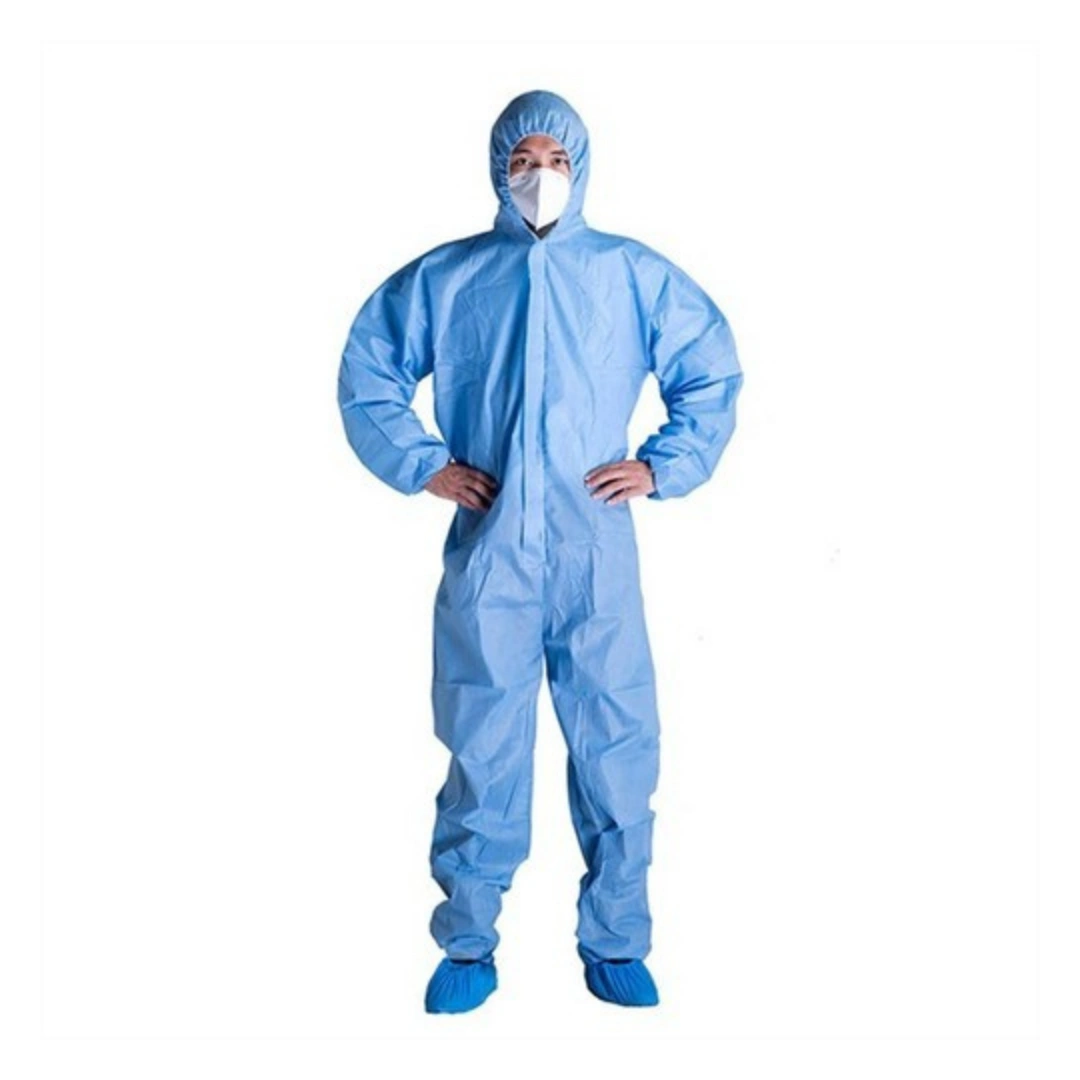
Coveralls are full-body protective garments designed to provide comprehensive 360-degree coverage for healthcare professionals and laboratory personnel. They act as a high-level barrier against hazardous biological agents, chemicals, and infectious particulates. Coveralls are essential for maintaining safety in high-risk environments where the risk of full-body exposure to contaminants is prevalent.

Manufactured using advanced multi-layered fabrics such as Microporous film or SMS (Spunbond-Meltblown-Spunbond), coveralls offer superior strength, fluid resistance, and breathability. They are engineered with integrated hoods, elasticated wrists, and ankles to ensure a completely sealed environment that protects the wearer from head to toe.

Uses

Medical coveralls are used for maximum protection in high-risk contamination zones.

  • Treatment of highly infectious diseases (e.g., Viral Hemorrhagic Fevers)

  • Chemical and biological hazardous material handling

  • Emergency response and disaster relief operations

  • Forensic investigations and high-sensitivity laboratory work


Features

Designed for maximum containment and wearer safety, these garments ensure total isolation.

  • Integrated Hood: Provides protection for the head and neck areas.

  • Front Zipper with Storm Flap: Ensures a secure closure and prevents seepage through the zipper.

  • Elasticated Seals: Snug fit at the wrists, ankles, and waist to prevent particle entry.

  • Tear-Resistant Fabric: Durable construction to prevent accidental punctures or exposure.


Applications

Used in environments requiring stringent infection control and bio-safety.

  • Isolation wards and quarantine zones

  • High-security research laboratories (BSL-3/BSL-4)

  • Emergency Medical Services (EMS) and trauma sites

  • Decontamination and sanitation units


Disclaimer

This high-level protective garment is for single-use and specialized scenarios only.

  • Follow strict "donning and doffing" protocols to avoid self-contamination

  • Dispose of as hazardous bio-waste immediately after use

  • Ensure the size is correct to prevent restricted movement or fabric stress